
What Is Your Business Really Worth?
Entrepreneurship Foundation News, Lending News | 03/25/2015
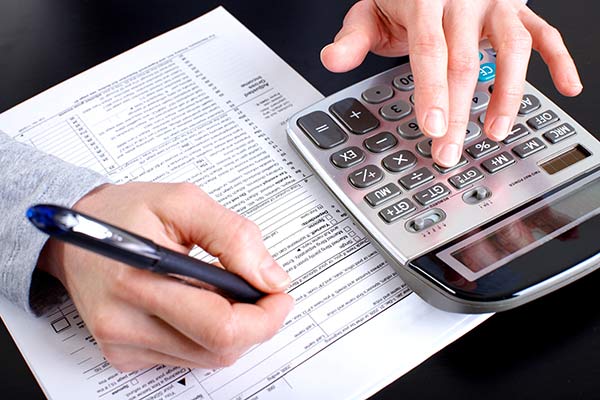
 At some point, the answer to this question will be critical to all business owners. You may want to sell your company, bring in new investors or partners, or consider an Initial Public Offering (IPO). You may need to determine value for purposes of estate planning. Or, you may simply want to do some competitive analysis and evaluate your company from a market perspective. Because some of these questions can arise suddenly, performing a complete valuation and periodic updates is a healthy practice for growing small businesses.
The Math Isn’t Simple
The very concept of value, especially to owners of a privately held company, often carries strong emotional connotations. They built it, after all, and it’s their mark upon the world. But in the marketplace, where the final determination is made, arithmetic holds sway: A company’s assets, minus its liabilities – all measured by objective standards – constitute its value. The math, however, isn’t that simple.
Cash Flow is King
Most closely-held businesses today are sold as a multiple of adjusted cash flow. Multiples vary in today’s market depending on the type of business. Manufacturing companies are typically valued around 4-6 times cash flow, but service businesses are trickier. Most closely-held businesses today are sold as a multiple of adjusted cash flow. Multiples vary in today’s market depending on the type of business. Manufacturing companies are typically valued around 4-6 times cash flow, but service businesses are trickier. With a service business, you need to look at whether you are integral to the business. If you can be replaced, and you have built a unique business demonstrating solid growth and strong employees, the multiple will be in the range of 5-8 times. If the business is not so unique, the multiple drops to 2-3 times. If you are the business, the selling price is calculated as a percentage of future earnings. Obviously, it will make a difference whether you continue to participate in the business (for example, as an advisor or consultant).
What Affects Sales Price?
Many different factors may impact the sales price of a business, and these can be broadly categorized in three areas: the market, the need for cash, and the reputation of the company.
- Market conditions – Selling a business is no different from selling real estate – there are up markets and down markets. Market conditions can change quickly, so pay attention to consolidations, new strategic alliances and business failures in your industry.
- Reputation – A company with good performance but no particular market recognition is less valuable today. Your reputation and the prominence of the company are key intangibles that build the company’s brand and make it much more valuable. Never underestimate the importance of building the brand and enhancing your reputation.
- Need for cash – The real estate analogy comes into play again: If you have to sell, you’re not going to get the best price. If you are strapped for cash and want to sell to raise cash, speak with your banker and other financial partners about your alternatives.
Understanding How Value Is Determined
Three approaches to valuation are commonly used.
- Market approach – This method looks primarily at comparable companies – the market price of stocks, if the companies are publicly traded, as well as merger and acquisition data. The biggest challenge in this approach is finding true comparables.
- Asset-based approach – This method is most appropriate when current returns to shareholders don’t adequately reflect fair market value. It relies upon the tangible asset and book values, express earnings calculation and liquidation value.
- Income approach – This method weighs cash flows, earnings capitalization (adjusted for external conditions and internal risk factors), price earnings multiples, discounted future earnings and so on.
Maximize Value Now
While business owners can’t affect the overall climate for mergers and acquisitions, they can take several steps to ensure their business is best positioned to maximize value. These include:
- Maintain excellent records (particularly in this post-Enron environment).
- “Clean up” the balance sheet and income statement – for example, making sure your accounts receivable and inventory are accurate and up-to-date.
- Build a strong foundation with a good management team and healthy core business.
- Have a strategy for continued growth that can be conveyed to a buyer.
By having a good understanding of the factors that can drive value for their business – and the methodologies commonly used by professionals when performing valuations – business owners can be in a better position to respond to and benefit from opportunities that may come their way. If you’re ready to apply for a business loan now, click here to contact us. To learn more information on small business loans and to find the one right for your business, visit the loan products page.